
Sow Thistle
Sow Thistle not only looks a lot like Dandelion, but is mostly interchangeable. The main difference is that it is less bitter. The young, tender leaves can be eaten in salads. But, as the plant matures, the leaves will become prickly, showing that it is in the thistle family. At that stage, they make very good cooked greens and are one of the best “wild spinaches”. Also, unlike Dandelion, the tender stems are a choice edible that can be cooked like asparagus, steamed and buttered or included in a cream or other soup, casseroles, eggs, etc. The stem of Dandelion is much more bitter and really only of use medicinally as a bitter herb. The flowers are edible, but also like Dandelion, they are best picked in the bud stage and pickled like capers.

Spiderwort
This was a plant that really surprised me when I found it was listed as edible. I had been told that it was poisonous, but I suspect that it had been included with Blue Flag Iris. Blue Flag, while having some medicinal uses, should not be foraged as food. Spiderwort is a beautiful spring wildflower, and should not be over harvested. Use the young stems like Asparagus and the tender, spring leaves as a potherb. The flowers may even be candied. Very generally speaking, blue flowered plants should be treated with caution. I am pleased to have learned of this one, as it is one of my favorite spring flowers and I can toss a few in with Trilliums and other plants that should not be over harvested.
One special dish I came up with when I found a nice patch of Spiderwort was a simple stir-fry. The Hostas were perfect for harvesting at the same time. So, I filled my basket with probably 70% Hosta shoots and a few hands full of Spiderwort. Of course, being early spring, I included some Ramps... that is my favorite edible plant, after all! The Spiderwort needed a quick blanch in boiling water to be similarly tender to the hostas. I drained and dried them well. I only cook with a wok on the grill since I don't have a gas stove anymore.... and I REALLLY miss my gas stove! But, we don't have central gas in the rural Appalachians. I do fine using my old coil burner electric stove for most things, but wok cooking is best over the higher heat that really only comes from real fire. I cut up some beef roast, against the grain and tossed it into a hot cast iron pan with some cooking oil. Once it began to brown I added the veggies and tossed it all together. A little ginger, chicken broth, some soy sauce, sesame and chili oil gave it the flavor I had in mind, and with some noodles it made a great meal.
Chili oil is very easy to make and I use it with a lot of wild foods. All you really need is some dried hot pepper flakes, spices of your choice and whatever oil you like. I like to use peanut oil. Common crushed red pepper will work, but it often contains a lot of seeds. I prefer Thai or Korean chili flakes. If you grow hot peppers, that is even better – just dry them thoroughly and remove the seeds. Put your chili flakes in a heat-proof bowl or pot, along with any spices you like. Star anise, cinnamon, cardamom, black pepper corns, etc. all work well. If you add raw garlic, you will need to keep the chili oil in the refrigerator and use it quickly. If you don't add garlic, it will keep at room temperature for as long as you need it. Heat the oil just as you would for deep frying and then pour it over the chili and spices. There will be a lot of sizzling and popping! A friend who owns a small family operated Chinese restaurant taught me to make chili oil because I was his only customer who liked food as hot as he does. He had to make a more mild version for his customers and was pleased when I liked the chili oil he made for his family. You can absolutely tailor it to your tastes. If you don't like it as hot as I do, use a more mild pepper. I never strain it; the crunchy bits are the best part!
This article is an excerpt from
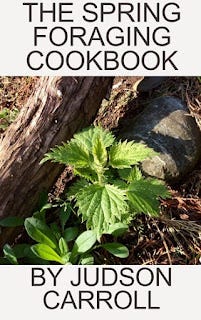
The Spring Foraging Cookbook: https://southernappalachianherbs.blogspot.com/2024/01/the-spring-foraging-cookbook.html
Available for purchase on Amazon: https://www.amazon.com/dp/B0CRP63R54
Also, I am back on Youtube. Please subscribe to my channel: @judsoncarroll5902 Judson Carroll - YouTube
Read about my other new books:
Herbal Medicine for Preppers, Homesteaders and Permaculture People: https://southernappalachianherbs.blogspot.com/2021/10/herbal-medicine-for-preppers.html
Available on Amazon: www.amazon.com/dp/B09HMWXL25
Medicinal Ferns and Fern Allies, an Herbalist’s Guide https://southernappalachianherbs.blogspot.com/2022/11/medicinal-ferns-and-fern-allies.html
Available for purchase on Amazon: https://www.amazon.com/dp/B0BMSZSJPS
A Daily Catholic Devotional Reflections on the Daily Mass readings July-December, 2025
https://southernappalachianherbs.blogspot.com/2023/12/a-daily-catholic-devotional-reflections.html
Medicinal Weeds and Grasses of the American Southeast, an Herbalist’s Guide
https://southernappalachianherbs.blogspot.com/2023/05/medicinal-weeds-and-grasses-of-american.html
Available in paperback on Amazon:
https://www.amazon.com/dp/B0C47LHTTH
and
Confirmation, an Autobiography of Faith
https://southernappalachianherbs.blogspot.com/2023/05/confirmation-autobiography-of-faith.html
Available in paperback on Amazon:
https://www.amazon.com/dp/B0C47Q1JNK
and
Medicinal Shrubs and Woody Vines of The American Southeast An Herbalist’s Guide
Read about Medicinal Shrubs and Woody Vines of The American Southeast An Herbalist’s Guide: https://southernappalachianherbs.blogspot.com/2022/06/medicinal-shrubs-and-woody-vines-of.html
Available for purchase on Amazon: https://www.amazon.com/dp/B0B2T4Y5L6: by Judson Carroll
Visit my Substack and sign up for my free newsletter:
Read about my new other books:
Medicinal Ferns and Fern Allies, an Herbalist’s Guide https://southernappalachianherbs.blogspot.com/2022/11/medicinal-ferns-and-fern-allies.html
Available for purchase on Amazon: https://www.amazon.com/dp/B0BMSZSJPS
The Omnivore’s Guide to Home Cooking for Preppers, Homesteaders, Permaculture People and Everyone Else: https://southernappalachianherbs.blogspot.com/2022/10/the-omnivores-guide-to-home-cooking-for.html
Available for purchase on Amazon: https://www.amazon.com/dp/B0BGKX37Q2
Medicinal Shrubs and Woody Vines of The American Southeast an Herbalist’s Guide
https://southernappalachianherbs.blogspot.com/2022/06/medicinal-shrubs-and-woody-vines-of.html
Available for purchase on Amazon https://www.amazon.com/dp/B0B2T4Y5L6
and
Growing Your Survival Herb Garden for Preppers, Homesteaders and Everyone Else
https://southernappalachianherbs.blogspot.com/2022/04/growing-your-survival-herb-garden-for.html
https://www.amazon.com/dp/B09X4LYV9R
The Encyclopedia of Medicinal Bitter Herbs: https://southernappalachianherbs.blogspot.com/2022/03/the-encyclopedia-of-bitter-medicina.html
Available for purchase on Amazon: https://www.amazon.com/dp/B0B5MYJ35R
and
Christian Medicine, History and Practice: https://southernappalachianherbs.blogspot.com/2022/01/christian-herbal-medicine-history-and.html
Available for purchase on Amazon: www.amazon.com/dp/B09P7RNCTB
Podcast: https://www.spreaker.com/show/southern-appalachian-herbs
Blog:
https://southernappalachianherbs.blogspot.com/
Free Video Lessons: Herbal Medicine 101 - YouTube
Disclaimer
The information on this site is not intended to diagnose or treat any disease or condition. Nothing on this site has been evaluated or approved by the FDA. I am not a doctor. The US government does not recognize the practice of herbal medicine and their is no governing body regulating herbalists. Therefore, I’m just a guy who studies herbs. I am not offering any advice. I won’t even claim that anything I write is accurate or true! I can tell you what herbs have “traditionally been used for.” I can tell you my own experience and if I believe an herb helped me. I cannot, nor would I tell you to do the same. If you use any herb I, or anyone else, mentions you are treating yourself. You take full responsibility for your health. Humans are individuals and no two are identical. What works for me may not work for you. You may have an allergy, sensitivity or underlying condition that no one else shares and you don’t even know about. Be careful with your health. By continuing to read my blog you agree to be responsible for yourself, do your own research, make your own choices and not to blame me for anything, ever.


No comments:
Post a Comment